
Legends of the Island of Magic: Scary Stories from Florianópolis
What mysterious stories are part of Floripa’s culture?
July 10, 2026
If you came to Florianópolis for its paradise-like beaches and the island’s relaxed atmosphere, get ready to discover a very different (and chilling) side of this destination: its legends! It’s no coincidence that the city is known as the Island of Magic. Beyond its stunning natural beauty, Floripa carries a rich imagination filled with stories that blend mystery, tradition, and a touch of fantasy.
Many of these tales were brought by the Azoreans who colonized the island and, for a long time, survived through oral tradition, passed down from generation to generation before being documented by scholars, especially researcher Franklin Cascaes, who dedicated his life to preserving this fantastic universe. And the most interesting part? These legends were never left in the past. They are still alive today, shaping the culture, tourism, and spirit of Floripa.

The Witches of the Island
If there is one symbol of Florianópolis’ folklore, it is the witches. These mysterious figures have been part of the island’s imagination since its earliest days and helped transform the city into what is now known as the Island of Magic.
The stories vary greatly. Some tales speak of witches braiding horses’ manes during the night, leaving the animals restless by dawn. Others mention stolen boats, taken so subtly that no one could explain who had taken them.
In local tradition, the fear surrounding these women did not come only from supposed supernatural powers, but also from their independence and the way they challenged society’s norms. Some lived alone, others had strong opinions or occupied roles that were not expected of women at the time. Many were healers or spiritual blessers, with deep knowledge of plants and natural remedies, and for that very reason they were labeled as witches. Over time, people’s fear transformed these women into mythical characters, and their actions came to be interpreted as magic and supernatural power.
What is most fascinating is that many of these stories survived through generations and were reinterpreted over time. In the past, the word “witch” was used with fear and suspicion. Today, it can carry a more symbolic meaning, representing feminine strength, ancestral knowledge, and the rich cultural heritage that Floripa carries within it.
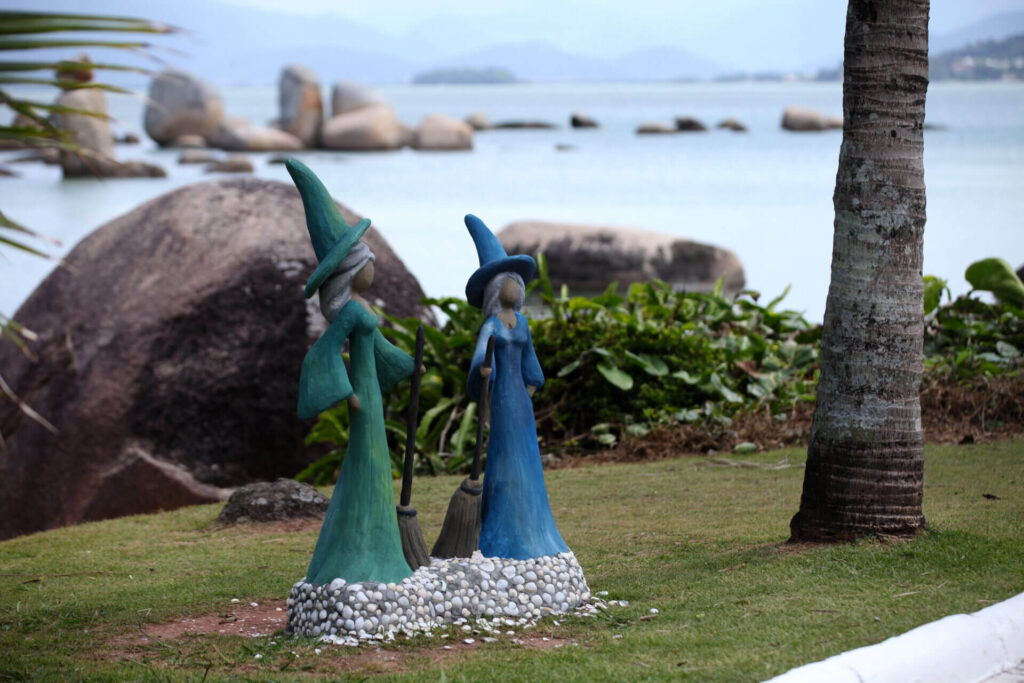
The Witches of Itaguaçu
Legend has it that, a long time ago, a group of witches would gather at Itaguaçu Beach for secret nighttime meetings. But on one of these nights, something went wrong.
The witches organized a big celebration, but decided not to invite the devil, claiming he smelled of sulfur. This act of defiance did not go unnoticed. As punishment, the devil appeared in rage and cast a curse: they would all be turned into stone, right there, with no chance of escape.
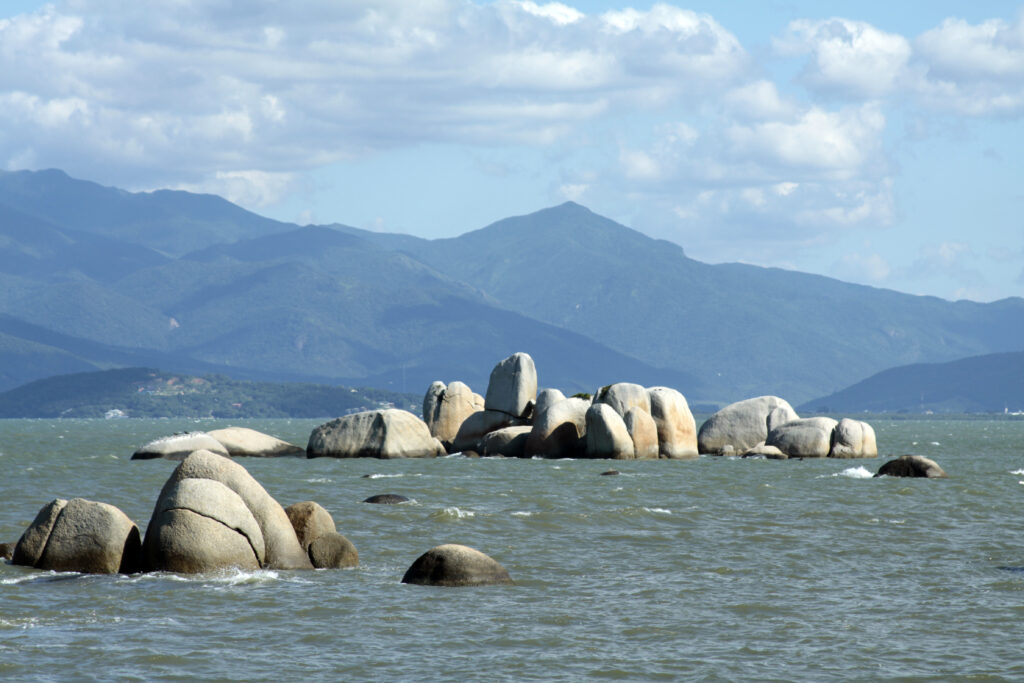
And so, according to the legend, the rock formations scattered along the sea at Itaguaçu Beach were created. Today, visitors to the area can see these stones and, with a bit of imagination, even identify silhouettes that resemble human figures. True or not, the fact is that this story has been passed down through generations and has become one of the most well-known legends of Florianópolis.
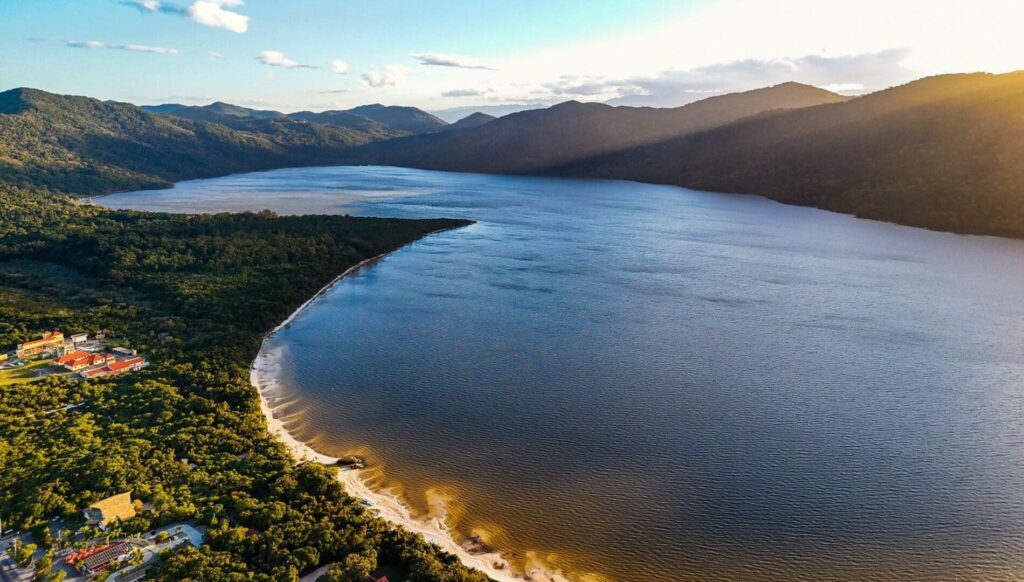
Peri Lagoon and Conceição Lagoon
Not all of the island’s legends are frightening. Some are marked by romance… and tragedy.
One of the best-known stories tells of a love affair between Peri, an Indigenous man, and Conceição, a witch. But this was no ordinary romance: they came from different worlds, and like every good tragic story, their love was not accepted. Their relationship was forbidden, and as punishment, the two were separated forever. Peri’s tears are said to have formed Peri Lagoon, while Conceição, overwhelmed with sadness, also cried endlessly, giving origin to the largest lagoon on Santa Catarina Island, the Lagoa da Conceição.
Creatures and Hauntings of the Island
Beyond witches, the Island of Magic holds a rich imagination filled with creatures and unexplained phenomena that are part of local folklore.
The Werewolf of Ratones
In the neighborhood of Ratones, in the northern part of the island, there is one of the best-known legends outside the witch folklore: the Werewolf of Ratones. The story tells of a woman who noticed something strange roaming around her house at night. A “dog” would appear whenever she went out to bathe her child, trying to bite her.
One night, irritated, she scared the animal away. It fled, leaving tears in her skirt. The next day, to her shock, she discovered that the attacker was not an ordinary dog, her own husband had been turning into a werewolf, disappearing every night and returning without anyone suspecting. The proof came when she noticed pieces of her torn skirt still stuck in his mouth.
The Lights of Northern Florianópolis
In Canto do Bota, also in the northern part of the island, residents report a phenomenon that inspires both fascination and fear: mysterious lights that appear at night over the coastline. They emerge as small glowing spheres that can grow and move, sometimes seeming to follow people walking or boating in the area.
There are several explanations within local traditions. Some say they are the spirits of deceased fishermen, others believe they are the soul of a priest who died in the region, and some see them simply as a natural mystery that has not yet been explained.
The Boitatá
Although it is a legend of Indigenous origin found in many regions of Brazil, the Boitatá is also part of the imagination present in Florianópolis. In the Guarani language, “mboy tatá” literally means “fire serpent” (mboy = snake, tatá = fire). Over time, the expression was reinterpreted by Portuguese speakers, who associated the name with “boi” (ox).
In Florianópolis, rather than a localized version of the legend, what exists are reports and interpretations of popular imagination that link mysterious lights seen in natural areas, especially mangroves and wetlands, to this kind of folklore narrative. These accounts are associated with natural phenomena such as will-o’-the-wisp, which can occur in environments with decomposing organic matter, producing small lights visible at night.
This type of narrative gained even more strength thanks to the work of folklore researchers such as Franklin Cascaes, who recorded and helped preserve many of the popular stories and beliefs of the Island of Magic.
The Role of Franklin Cascaes
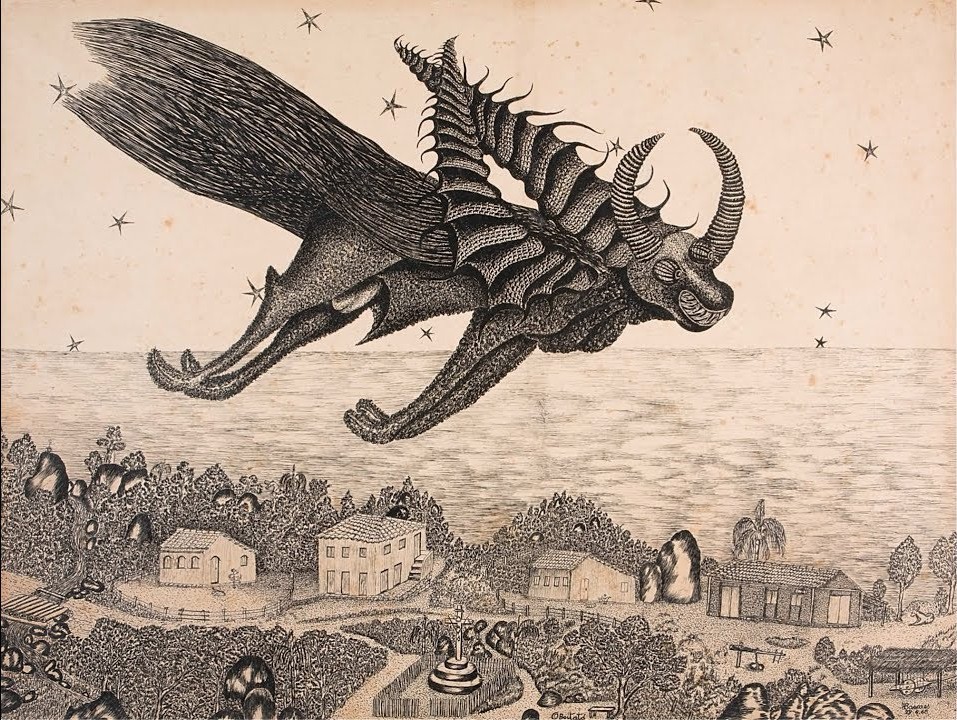
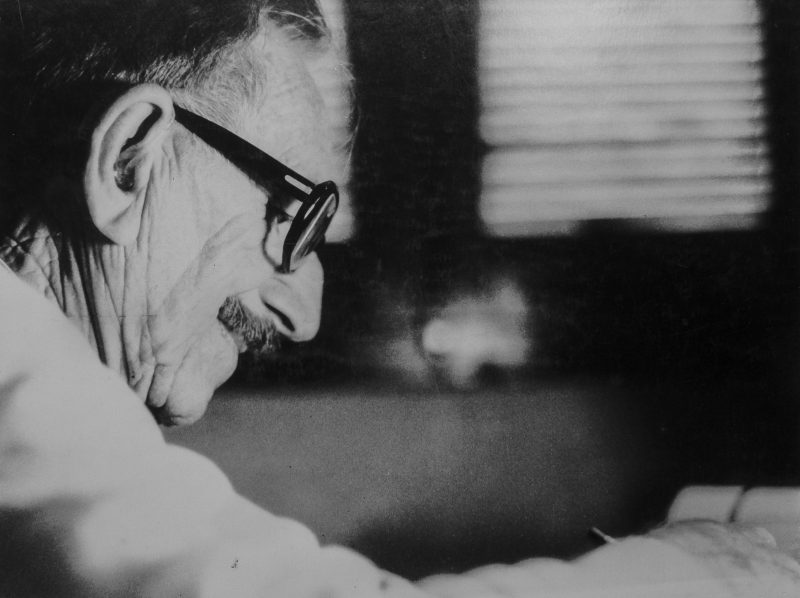
If we know so many of these stories today, it is largely thanks to the work of Franklin Cascaes. He was the main figure responsible for recording the island’s folklore, documenting legends about witches, werewolves, magical creatures, and the old customs of the local population. His work goes beyond simple storytelling: Cascaes also created illustrations, engravings, and sculptures that captured the imagination and memory of these narratives. Thanks to him, many traditions that once existed only through oral storytelling were preserved and studied, helping to establish a fundamental part of Florianópolis’ cultural identity.
For those who want a more complete analysis of his works and importance, check out our dedicated article dedicado a Cascaes here!
Curiosities
The legends of the Island of Magic do not exist just to frighten people: they play a deep cultural role and say a lot about how locals used to see the world in the past… and still see it today.
Many of these legends were born as ways to explain natural phenomena that once puzzled people: strange sounds at night, mysterious lights on the water, unusual rock formations, or sudden weather changes. In times when science was not accessible to everyone, these stories helped make sense of what seemed like magic.
Some narratives also emerged as a way to teach children, encouraging behaviors such as being careful when walking alone at night or respecting nature and elders. It was a playful way of passing down values and boundaries, using characters that everyone knew.
Each community on the island has its own versions of many of these legends. The same figure can appear in different forms depending on who tells the story, and this is part of the richness of oral folklore, which adapts and lives alongside people.
The most interesting part is that these stories did not remain in the past. They are still alive in local tourism and culture: in informational signs, guided tours, museums and fairs, and in conversations between residents and visitors.
So when you’re here, why not look at the island with different eyes? Pay attention to the details, listen to the locals’ stories… and perhaps feel a little of the magic that gave rise to all of this.
And if you want to dive even deeper into this cultural and mysterious side of Florianópolis, a great way to explore the island is through our Private City Tour by Car, with a personalized itinerary and stops that help connect landscapes, stories, and curiosities of the Island of Magic in a much more special way.
Gabriela Scherer
Author
I am a film student, passionate about culture and stories that connect people. I have been dancing for over seven years and have explored seven countries in search of new inspiration. Between a photo and a good conversation, I continue living art every day.
 English
  Portuguese
  Spanish