How to do it, the best route, and when to visit this paradise in Florianópolis?
August 12, 2025
The first time I did the Lagoinha do Leste trail, I went with my dad. It had just stopped raining after several days of rain, and the trail was quite slippery in some sections because of the mud. I confess I slipped several times! But with every turn, the scenery became even more beautiful, and the anticipation of reaching the beach only grew. When we finally caught sight of the sea and that wild landscape, I understood why so many people consider this one of the most special trails on the island.
If you want to visit Lagoinha do Leste, it’s important to pay attention to the different ways to get there. There’s a shorter and easier route, and others that are more difficult but rewarding, as they lead you to Morro da Coroa and the famous Surfista’s Rock. It’s also worth paying attention to the local wildlife and flora, as well as the best time and weather conditions for the hike. I’ll share everything you need to know before going if you want to do it on your own, but if you prefer a guided experience, with more safety and peace of mind, you can join us!
Check out our tour, see our availability calendar and come along!
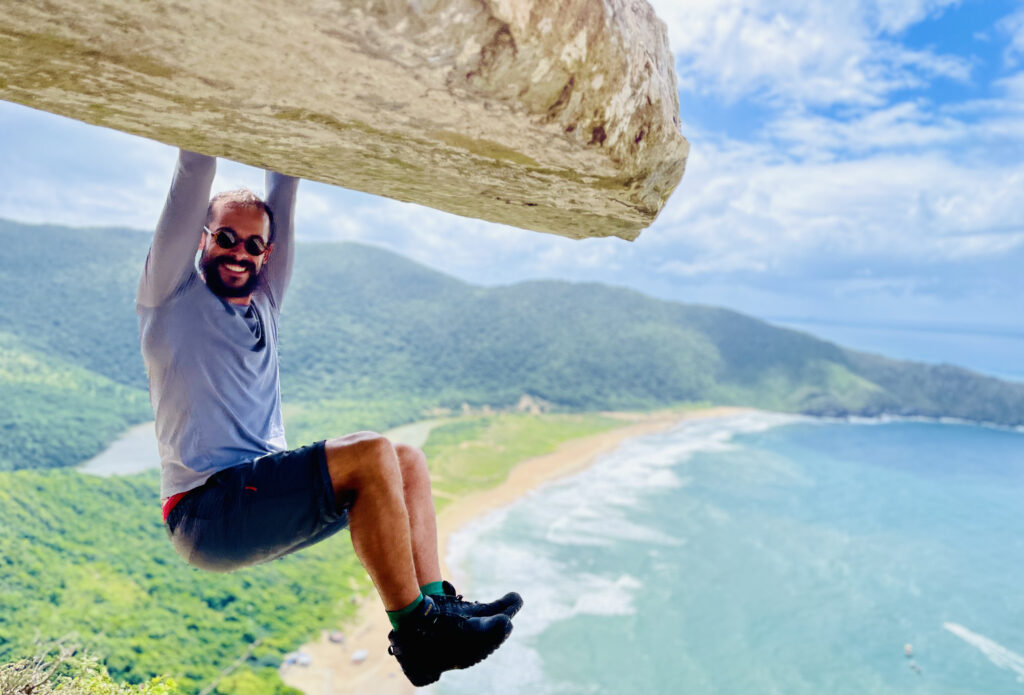
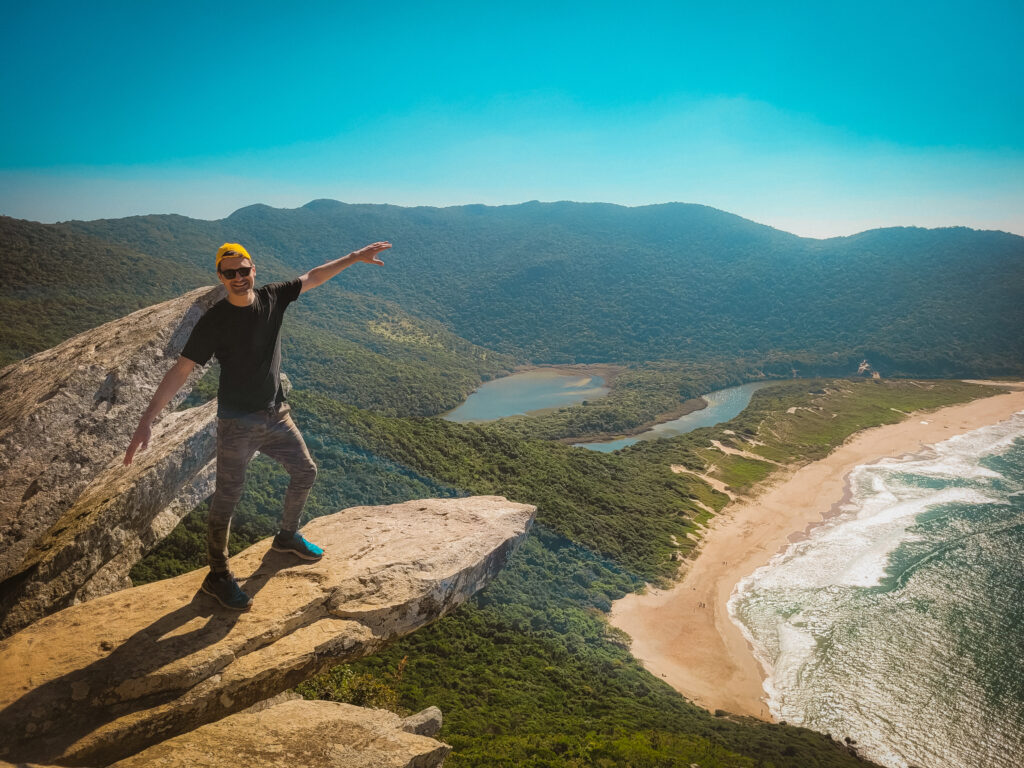
Our guide Isaac posing at Surfista’s Rock, a panoramic viewpoint with a privileged view of Lagoinha do Leste Beach.
How to get there
Lagoinha do Leste Beach can be accessed by two main hiking trails, both located in the southern part of the island. The first starts in the neighborhood of Pântano do Sul, at the end of Manoel Pedro de Oliveira Street, where it’s possible to park nearby. This trail is shorter and more direct (about 2.3 km), but also steeper and more slippery on humid days. It’s the one I usually take, and although it requires some physical effort, it is well marked and relatively quick (about 1 hour and 15 minutes).
The second option starts at Praia do Matadeiro, accessed from Armação (you need to cross the river or a small footbridge at the beginning). This trail is about 4.5 km long and runs along the cliffs, offering incredible views of the ocean and rock formations. It’s longer, but less steep and great for those who want to enjoy the walk at a slower pace. Keep in mind that this trail does not form a loop: if you go one way and return the other, you’ll need to plan transportation between the starting and ending points, especially if you have a car.
Regardless of the trail you choose, the effort is worth every step, and the view when you arrive at Lagoinha always makes it worthwhile. But if you’re expecting to take those famous photos on the rocks, there’s still a bit of a hike ahead!
Morro da Coroa and Surfista’s Rock
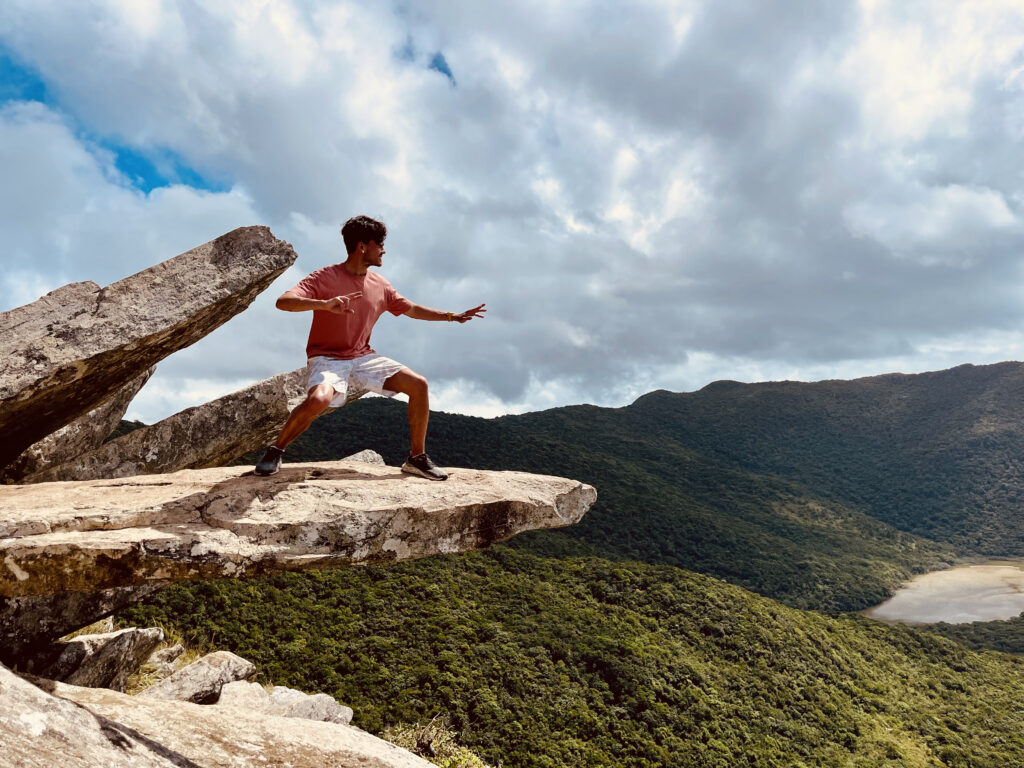
If you’ve ever seen an aerial photo of Lagoinha do Leste on social media, it was very likely taken from the top of Morro da Coroa, also known as Surfista’s Rock. Located on the right side of the beach (facing Pântano do Sul), this natural viewpoint offers one of the most impressive views on the island: from the top, you can see the entire stretch of the beach, the lagoon, the surrounding mountains, and the ocean fading into the horizon.
Our “Guided Trail to Lagoinha do Leste” tour offers professional and certified guides who can make your experience safer, smoother, and richer in information. But if you prefer to hike on your own, there are two options to reach the top:
From the beach to Morro da Coroa – The easiest way to access the viewpoint is from Lagoinha do Leste beach, with a steep climb of about 30 minutes.
Pântano do Sul trail with right fork – An alternative route that is less signposted, recommended for those with more hiking experience.
English tourist posing at Surfista’s Rock, Morro da Coroa.
Important notice! In a recent inspection carried out by the Civil Defense of Florianópolis, a risk of rock instability was identified due to natural erosion processes. As a preventive measure, access to Surfista’s Rock has been restricted, and the Municipal Environmental Foundation (Floram) has installed warning signs on site to alert visitors about the risks, not recommending climbing the famous rock. For this reason, it is essential that visitors follow the guidance provided by Floram or by tour guides, especially on rainy or windy days, or right after periods of rain, when the terrain becomes even more unstable and slippery. If you are descending Morro da Coroa back to the beach, take extra care on the steep slopes. In some sections, it is recommended to descend sitting down or using all fours for better safety.
Local wildlife
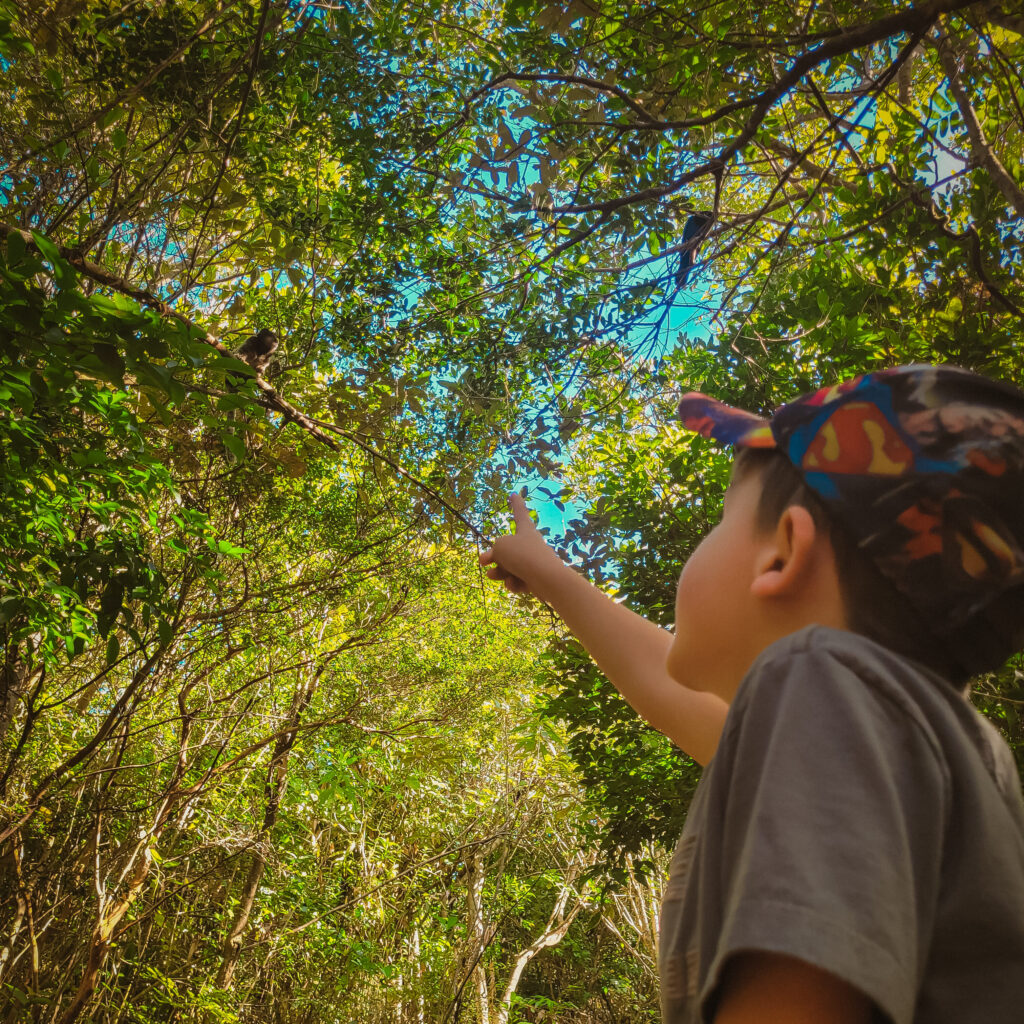
Beyond its natural beauty, the Lagoinha do Leste trail crosses a vast area of Atlantic Forest, as it is located within the Lagoinha do Leste Municipal Park, one of many protected conservation areas on the island. The park serves as a habitat for various land animals. In the dense forests and transition areas near the trail, it is possible to find armadillos, monkeys, and small rodents, all of which play an important role in maintaining the balance of the local ecosystem. However, the most commonly seen animal is the Black-tufted marmoset, which, despite its cute appearance, is an invasive exotic species introduced to the island by human activity—often as a pet later released into the wild. Today, it competes with native species and preys on bird eggs and chicks. For this and other reasons, they should not be fed.
Curious encounter between a child and a marmoset on the way to Lagoinha do Leste.
And speaking of birds, there are more than 150 recorded species in the park, including seagulls, herons, and hawks. These birds are a highlight for visitors. Some are rarer to spot, such as toucans, while others are quite common, like the azure jay.
In addition, the lagoon that gives the place its name is home to fish and small crustaceans, and in the sea it is possible to spot dolphins and sea turtles. In winter, fish and the Southern Right Whale can also be seen along the coast.
It is also important to be aware of some snake and spider species typical of the Atlantic Forest. Among snakes, the most common is the jararaca (Bothrops jararaca), which is venomous, as well as harmless species like the false coral snake and the “sleeping snake.” Among spiders, the wandering spider (Phoneutria sp.) can be found, considered aggressive and venomous, as well as tarantulas, which, although large, generally do not pose a serious risk. To avoid accidents, it is recommended to wear closed shoes, long pants, avoid putting hands in dark places or under rocks and logs, and always stay attentive while walking. In case of a bite, it is essential to seek medical attention immediately and, if possible, identify the animal responsible.
American tourist with a native spider species from the region.
Flora e História
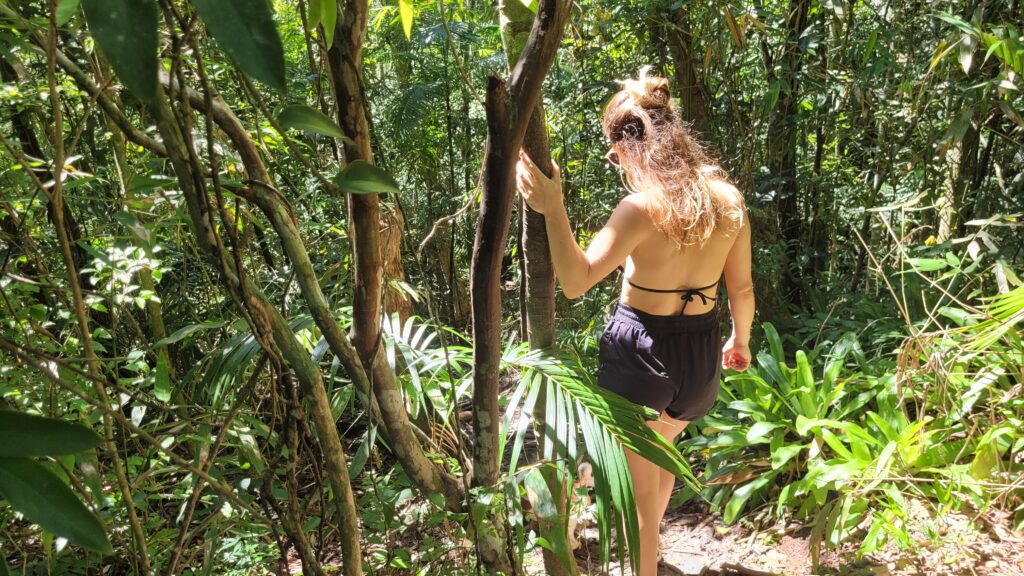
Lagoinha was not always the green paradise we know today. Throughout much of the 20th century, the area was used for grazing and agriculture, with native vegetation cleared to make way for pastures. The creation of the Lagoinha do Leste Municipal Park marked a turning point: with legal protection and the end of these activities, the vegetation was able to regenerate naturally. Today, the area shows different stages of regeneration, visible along the trail.
Dense forest section on the Pântano do Sul trail leading to Morro da Coroa.
Best time to visit
Lagoinha do Leste can be visited all year round, but choosing the right season makes a big difference in the experience. It all depends on what you’re looking for: warmer sea, milder weather, quieter trails, or less rain. In general, April and May stand out as the best months for hiking, offering mild weather, pleasant sea temperatures (and the lagoon itself becomes almost like a jacuzzi!), and a lower chance of rain. But if you’re planning your trip for another time of the year, don’t worry! Below is what each season is like.
Autumn (April and May) is usually the most recommended period. Days are less humid, rainfall drops significantly compared to summer, and the sea is still pleasant for swimming. There are also fewer visitors on the trails and beaches, making the experience more peaceful. It’s a great choice for those who want a comfortable and safe hike.
Summer (December to March) is the high season in Florianópolis. Days are long, hot, and the sea is perfect for swimming. However, it’s also the period with the highest chance of short rain showers (usually in the late afternoon), which can make the trail more slippery. Bring plenty of water, wear light clothing, and don’t forget sunscreen.
Winter (June to August) brings milder temperatures and less rain, making the hike more comfortable for those who prefer walking without heat. The downside is that the sea is very cold, and winds can be stronger, especially at higher points of the trail. Still, it’s a good season for those looking to avoid crowds and enjoy nature in silence.
Spring (September to November) is a transition period between dry winter and rainy summer. The landscape becomes especially beautiful with blooming vegetation, but the weather can be more unstable, with a higher chance of unexpected rain and cloudy skies, especially in October and November.
Avoid rainy days: besides making the trail more slippery, conditions can become dangerous in some sections, especially on steep or muddy areas. Access to Surfista’s Rock (also known as Morro da Coroa), one of the most popular viewpoints, becomes even riskier in wet conditions or strong winds.
Nosso Passeio Guiado
In the end, Lagoinha do Leste is much more than just a hike: it’s a unique experience that connects you to nature, challenges your body, and rewards your soul with one of the most incredible landscapes in Florianópolis. For those who want to enjoy this adventure with comfort, safety, and the peace of mind of a route planned by people who know every detail, our guided tour is the ideal choice.
Our tour includes the trail from Pântano do Sul to Lagoinha do Leste and the hike up Morro da Coroa, offering a complete and enriching experience. Groups depart at 9:00 a.m. in the low season and at 8:00 a.m. during the summer season, with prices starting at R$200 per person, depending on group size. Reservations can be made directly on our website, making your planning easier.
Brazilian tourist enjoying the view from the top of Surfista’s Rock at Lagoinha do Leste.
Boat tour
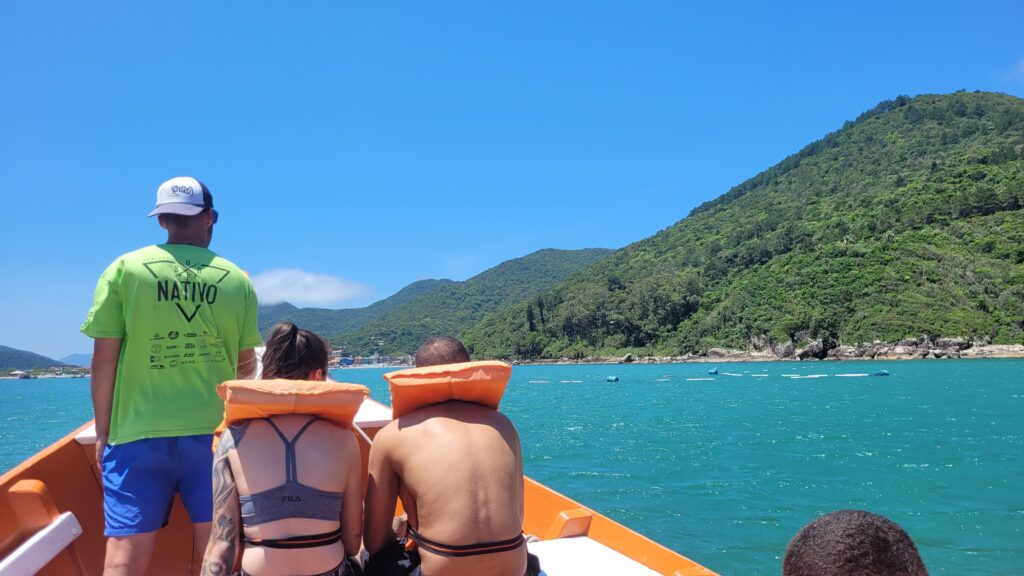
Another way to reach or leave Lagoinha do Leste is by boat, departing from Pântano do Sul Beach. The sea route offers a unique perspective of the coastline and can be an alternative for those who want to avoid the hiking effort or simply enjoy a different experience. However, this service, costing around R$70 per person, is more common during the high season and depends on weather and sea conditions, being safer on calm days. In other words, you can’t always rely on this option, so it’s best to keep your “leg day” up to date, as the trail is considered quite challenging.
Boat return from the trail to Pântano do Sul.
What to bring
No matter how you choose to enjoy this adventure, remember to bring water, snacks (although during high season there are kiosks selling food and drinks, prices can be quite high), sunscreen, and appropriate clothing. Most importantly, help preserve this paradise by taking all your trash back with you. Lagoinha do Leste is a true gift from nature, and its protection depends on the care and respect of everyone who visits it.
Conclusion: challenge, preparation, and reward
The Lagoinha do Leste trail is one of those hikes that combines physical challenge with visual reward. It doesn’t matter whether you choose the short and steep route from Pântano do Sul or the longer, more scenic path from Praia do Matadeiro: the trail requires a reasonable level of fitness, attention on wet days, and willingness to handle both climbs and descents. Bringing water, light snacks, sunscreen, and proper footwear is essential to ensure comfort and safety.
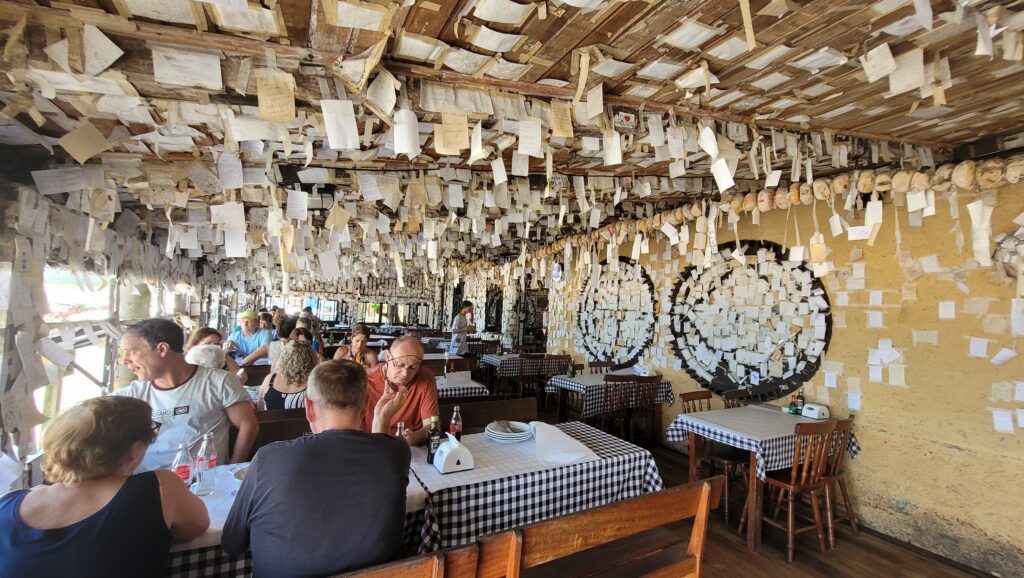
And after a full day immersed in nature, nothing better than recharging your energy. In Pântano do Sul, you’ll find great options to end the experience on a high note, with a pastel and sugarcane juice right at the beginning/end of the trail, or at the traditional Bar do Arante, famous for its handwritten notes on the walls, fresh seafood, and good beer or caipirinha!
Bar do Arante, Pântano do Sul.
Gabriela Scherer
Author
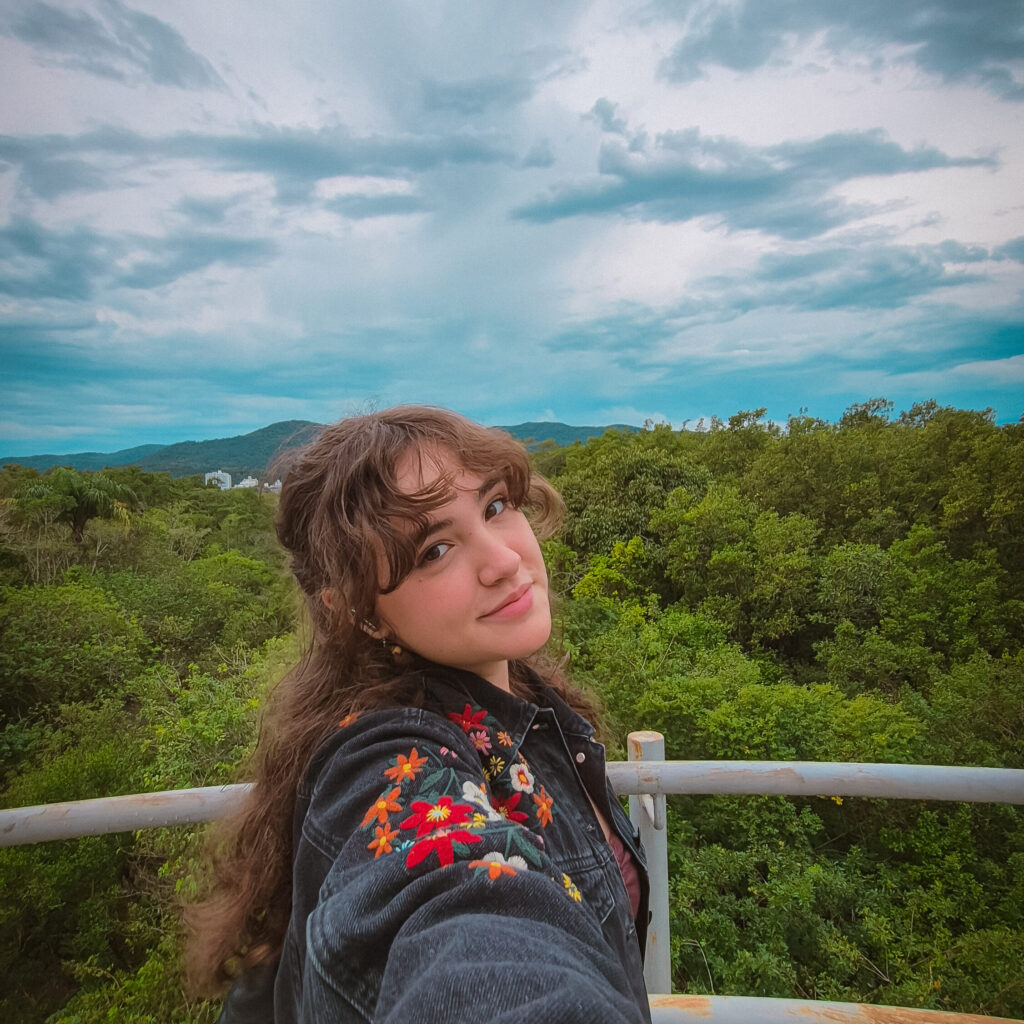
I am a film student, passionate about culture and stories that connect people. I have been dancing for over seven years and have explored seven countries in search of new inspiration. Between a photo and a good conversation, I continue living art every day.


 English
  Portuguese
  Spanish